

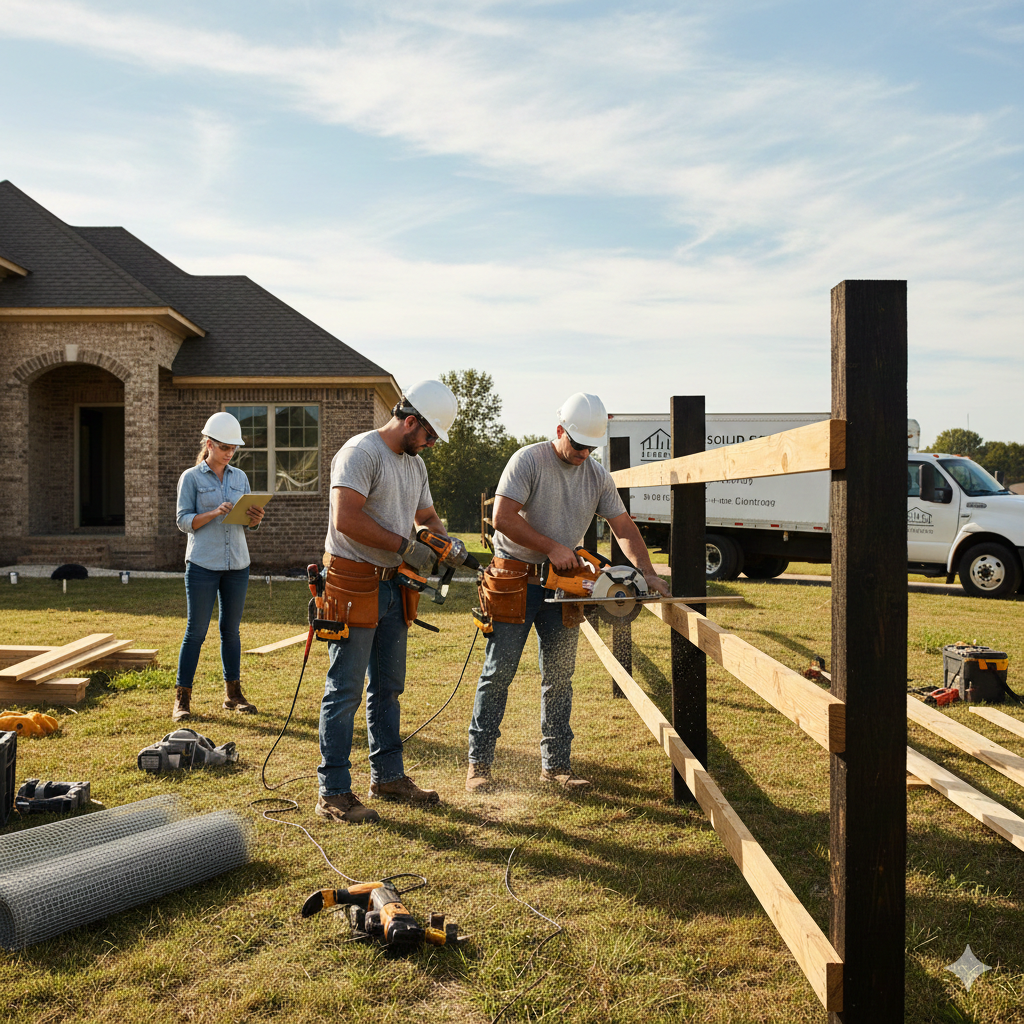

Fencing Contractors: Expert Installation, Repair, and Material Guidance
You want a fence contractor that matches your needs—privacy, security, curb appeal, or low maintenance—and a contractor who delivers it on time and on budget. Choose a contractor who clearly explains material options, installation steps, and costs up front so you avoid surprises and get the fence that fits your property and lifestyle.
This post Fencing Contractors walks you through common fencing solutions, how to compare materials and styles, and practical steps to vet contractors so you hire someone dependable and skilled. Expect straightforward guidance that helps you evaluate quotes, check credentials, and make decisions with confidence.
Types of Fencing Solutions
Choose fences by purpose, material, and maintenance needs so your install matches budget, privacy, and local code requirements. Below are specific options and typical trade-offs to help you select the right solution.
Residential Fence Options
For yard privacy and pet containment, consider wood privacy panels, cedar or pressure-treated pine, which offer solid coverage and can be stained; expect periodic sealing every 2–5 years.
If low maintenance and longevity matter, pick vinyl or composite panels; they resist rot and need only occasional washing.
For visibility and boundary marking, chain link delivers the lowest cost per linear foot and is easy to repair; add slats or shrubs for added privacy.
If curb appeal and classic style matter, choose picket or decorative metal (aluminum or wrought iron) for front yards; these require less material but often need periodic painting or rust prevention.
Consider gates, hardware grade, and post foundation—concrete-set posts increase lifespan.
Ask your contractor about local setback rules and utility locates before installation.
Commercial and Industrial Installations
Security, durability, and code compliance drive commercial choices.
Chain link with privacy slats and barbed wire or razor ribbon suits warehouses and yards requiring clear perimeter visibility and fast installation.
For higher security, select welded steel palisade, high-security mesh panels, or crash-rated barrier systems where vehicular access control is needed.
Corrosion-resistant finishes, galvanizing, and anti-climb features prolong life and meet insurance or regulatory requirements.
Access control integrates with gates, electronic operators, card readers, and CCTV mounts.
Specify fence heights, footing depths, and anti-undermining measures to comply with building codes and safety standards.
Custom and Decorative Designs
Custom fencing balances aesthetics with function for pools, gardens, and historic properties.
You can mix materials—wood posts with metal pickets, or stone piers with timber panels—to match architecture and landscape.
Ornamental aluminum offers classic lines without heavy maintenance and can mimic wrought iron at lower cost.
Laser-cut metal panels, custom gate automation, and integrated lighting add design value and usability.
Discuss finish options, corrosion protection, and fabrication tolerances with your contractor to ensure the final product fits site conditions and maintenance expectations.
Selecting Reliable Service Providers
You need contractors who combine proven workmanship, proper credentials, and documented experience. Focus on measurable indicators: punctual estimates, written contracts, verifiable references, and clear warranty terms.
Qualities to Look For
Ask about crew size, lead installer experience, and typical project timelines. A reliable contractor gives a written estimate with line-item costs for materials, labor, permits, and cleanup.
Check communication: prompt replies, documented change orders, and a single point of contact reduce mistakes.
Prioritize contractors who offer a written warranty covering both materials and labor for a specified period. Warranty length and coverage should appear in the contract.
Seek local firms with a physical office or shop you can visit. That reduces the risk of no-shows and simplifies warranty follow-up.
Request three recent references and visit at least one completed job. Inspect post-installation details: post alignment, gate operation, and finish consistency.
Licensing and Accreditation
Confirm the exact licenses the contractor holds for your municipality and for electrical or structural work if your fence includes lighting or retaining components. Ask for license numbers and verify online through your state or provincial licensing board.
Check insurance: require proof of general liability and worker’s compensation with your property listed as an insured location when applicable. Do not accept expired or uninsured claims.
Look for third-party accreditation like BBB listing, trade association membership, or manufacturer installer certification for specific fence systems. These indicate adherence to industry standards and access to proprietary materials or warranties.
Record all credentials and expiration dates in your project file before signing a contract.
Evaluating Project Portfolios
Ask for a portfolio showing at least five completed projects similar to yours in scope and material. Photos should include before, during, and after shots with close-ups of post settings, hardware, and end posts.
Request addresses or permission to visit sites; a walk-through confirms workmanship and lets you ask owners about scheduling and problem resolution.
Compare quoted materials to portfolio results. If a contractor promises “premium cedar” or “commercial-grade steel,” the portfolio should display comparable material quality and detailing.
Note consistency: repeated issues across jobs—uneven rails, warped boards, or sloppy concrete—signal systemic problems. Use the portfolio to form specific interview questions about techniques, timelines, and subcontractors used.