


Copper Mining: Modern Techniques, Environmental Management, and Market Outlook
You depend on copper every day — in the wires that power your home, the EV that might be in your driveway, and the renewable grid that’s expanding worldwide. Copper mining supplies the raw metal that enables modern electrical systems and clean technologies, and understanding how it’s extracted and processed tells you where supply, cost, and environmental risk come from.
This article Copper Mining walks you through how copper moves from ore to usable metal, the main mining methods and processing steps, and the economic and environmental trade-offs shaping today’s projects. Expect clear explanations of extraction techniques, the biggest factors affecting supply, and what responsible production looks like so you can follow the bigger picture behind every copper-powered device.
Processes in Copper Extraction
You will encounter three core areas: surface and underground mining methods that recover ore, and the processing chain that concentrates and refines copper into saleable metal. Each area involves specific equipment, sequencing, and environmental controls.
Open-Pit Mining Methods
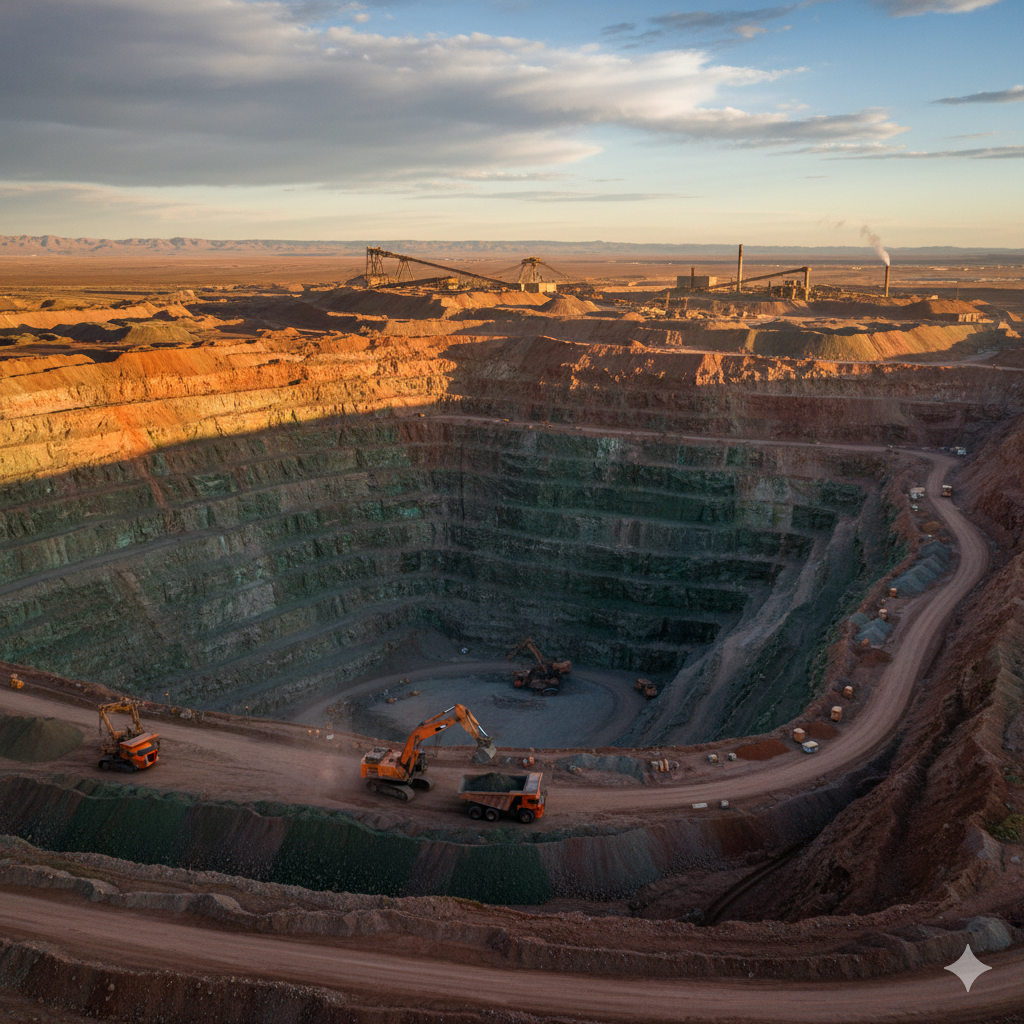
Open-pit operations use large, bench-style excavations to access near-surface copper ore bodies. You will typically see drilling and blasting to fragment rock, followed by wheel loaders, electric rope shovels, or hydraulic excavators that load haul trucks sized from 50 to 400+ tonnes.
Fragmented ore moves to primary crushers and coarse stockpiles. You must manage pit design (bench height, slope angles), haul-road geometry, and fleet productivity to minimize cost per tonne. Water control—drainage, pit dewatering—and dust suppression are essential for safe, continuous work.
Pit operations often separate ore from waste using grade-control sampling and short-interval mine planning. You should expect progressive rehabilitation of pit berms and waste dumps and staged tailings placement where applicable to meet regulatory requirements.
Underground Mining Techniques
Underground copper mines use methods chosen for deposit geometry and rock competence, such as block caving, sublevel stoping, or cut-and-fill. You will find block caving on large, low-grade orebodies: drawpoints and undercut zones collapse to produce large volumes with low unit cost.
For narrow, higher-grade veins, mechanized longhole stoping or room-and-pillar methods let you maximize recovery while controlling ground support with rock bolts and shotcrete. Ventilation, ground control monitoring, and remote or automated loaders and trucks reduce risk and increase output.
You must plan ore flow to surface via crushers or conveyors, manage backfill (paste or rock) to stabilize voids, and maintain strict ground support and safety protocols to prevent collapses and control subsidence at surface.
Ore Processing and Refining
Once delivered to the plant, ore follows either pyrometallurgical or hydrometallurgical routes based on mineralogy. For sulfide ores, you will see comminution (crushing and grinding), flotation to produce a copper concentrate (20–30% Cu), then smelting and converting to produce blister copper (~98–99% Cu). Electrorefining yields cathodes at 99.99% purity.
For oxide ores, you will encounter heap leaching with sulfuric acid, followed by solvent extraction and electrowinning (SX-EW) to produce cathodes directly. Key controls include leach kinetics, reagent dosing, and impurity management to protect electrowinning cell performance.
Across both routes, you must monitor mass balance, tailings handling (thickened tailings, paste, or filtered tailings), and emissions (SO2 from smelters, leachate management) to meet environmental permits and optimize metal recovery.
Economic and Environmental Impacts
You will find that copper’s economic role ties directly to where it’s produced, how markets price it, and which technologies reduce environmental harm. These links determine jobs, trade balances, emissions, and land use at mine sites.
Global Production and Major Producers
Chile, Peru, and China dominate primary copper production; Chile alone supplies roughly a quarter of mined copper. Large-scale open-pit operations like Escondida and Grasberg shape national export earnings and local employment.
You should note that concentrator plants, smelters, and refineries concentrate production in regions with both ore and processing capacity.
Production also concentrates capital and environmental risk. Mines generate tailings, require water for flotation, and change land cover over large areas. You need to consider permits, infrastructure (roads, power), and community agreements when evaluating a project’s viability.
Market Demand and Price Trends
Demand grows with electrification, renewable energy, and electric vehicles; analysts project significant incremental copper demand through 2035. You will see price sensitivity to supply disruptions, strikes, and concentrated output in a few countries.
Inventory levels on exchanges (LME, COMEX) and scrap recycling rates moderate price swings, but major mine project delays can push prices upward quickly.
Prices also respond to macro conditions: Chinese industrial activity, USD strength, and interest rates affect investment and consumption. You should track capital expenditure plans from major miners and planned mine closures to assess future supply tightness.
Sustainable Practices and Innovations
You must evaluate water use reduction, dry stacking of tailings, and sulfur dioxide capture at smelters as primary mitigation measures. Progressive operations invest in desalinated seawater, closed-circuit water systems, and renewable power to lower freshwater stress and carbon intensity.
Technological innovations include in-situ leaching for amenable deposits, heap-leach optimization, and electrified fleets that cut diesel emissions.
Recycling and urban mining reduce primary demand; secondary copper can meet a growing share of refined needs in regions with high scrap collection. You should weigh lifecycle emissions: recycled copper often has substantially lower CO2 per tonne than primary copper from conventional mines.